Double Girder
EOT Crane
Engineered for demanding industrial material handling where higher capacities, longer spans, controlled movement and dependable electric operation are required. The double-girder configuration provides a strong platform for heavy-duty lifting applications.
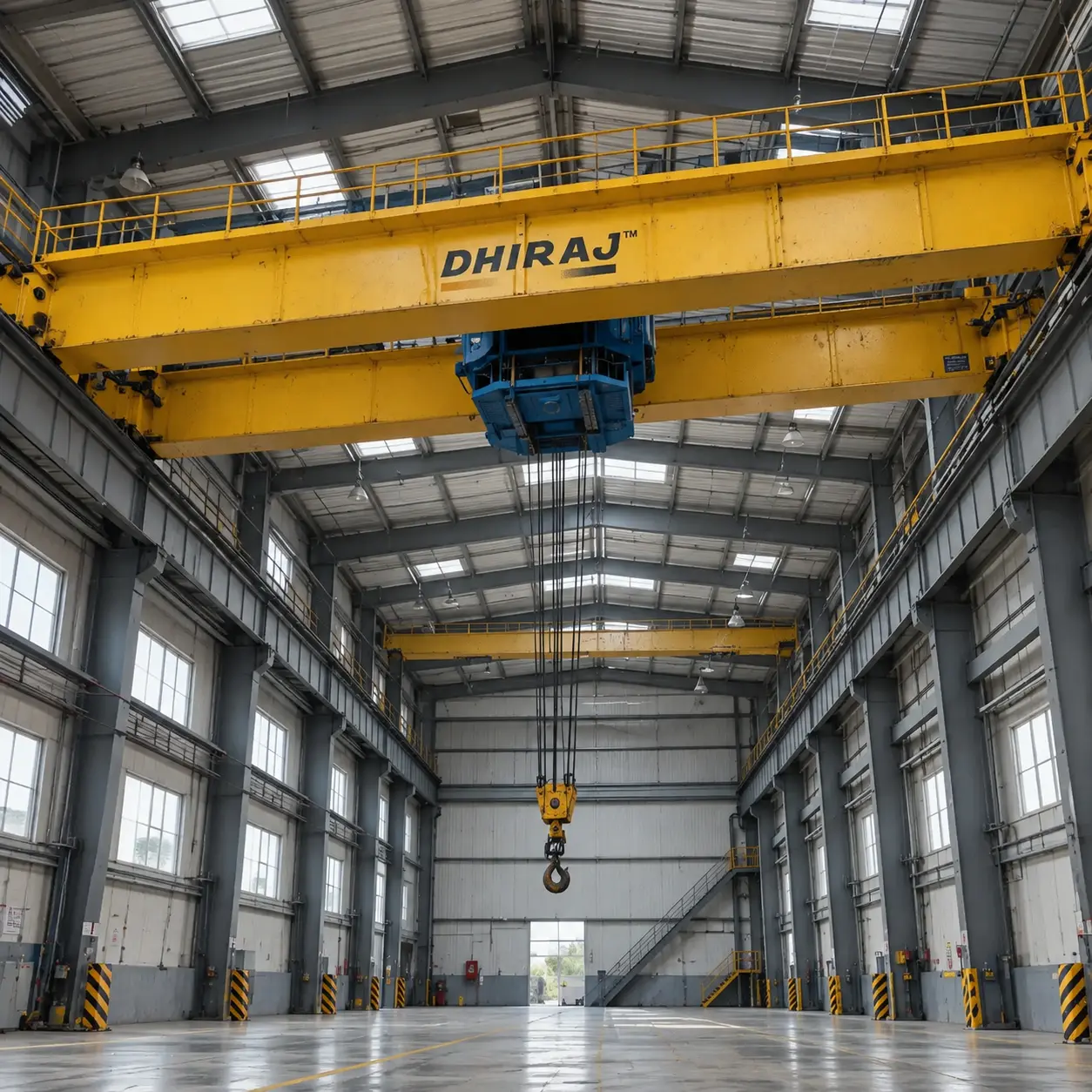
Built for heavy loads, long spans and demanding duty.
A Double Girder EOT Crane uses two parallel bridge girders with the hoisting trolley travelling along the bridge. This configuration is suited to heavy-duty industrial material handling where structural strength, lifting capacity and controlled movement are important.
Designed for demanding industrial lifting requirements across heavy engineering and material handling environments.
Suitable for wide operating areas where greater span and working coverage are required.
Two bridge girders create a robust platform for the trolley-mounted hoisting arrangement.
Capacity, span, lifting height and operating features can be configured around project requirements.
More structural support for demanding lifting applications.
The double-girder arrangement is intended for applications where lifting duty, span and working conditions call for a stronger crane configuration.
Two-Girder Bridge
Two parallel bridge girders form the main crane bridge and provide a strong supporting structure for the lifting system.
Higher Load Handling
The configuration is intended for heavy industrial lifting requirements across a broad capacity range.
Wide Working Areas
Long-span applications can be configured where material must move across a larger operating area.
Controlled Movement
Electric operation supports controlled lifting, trolley travel and bridge travel according to the selected configuration.
Application-Based Design
Crane configuration can be developed around load, span, lifting height and operating requirements.
Heavy-Duty Environments
Suitable for steel, power, engineering, infrastructure, marine and large material-handling environments.
Every major crane element has a role.
A practical view of the main systems that work together in a Double Girder EOT Crane.
Two parallel bridge girders form the main load-carrying arrangement and provide the travel path for the trolley and hoisting system.
The trolley travels across the bridge while the hoist raises and lowers the load through the hook assembly.
End carriages carry the bridge travel wheels and allow the crane to move along the designated runway system.
Controls are configured around the project requirement for lifting, bridge travel, trolley travel and safe operation.
Designed to make heavy material movement more practical.
The value of a double-girder crane is not only its lifting capacity. The complete configuration is planned around the working environment and handling requirement.
Supports industrial operations where large or heavy components need controlled movement.
A suitable span and runway arrangement can cover a large material handling zone.
Configuration can be tailored to capacity, span, lifting height and operating needs.
Overhead movement can help position heavy components across the designated work area.
Electric lifting and travel provide controlled movement for the selected crane arrangement.
Inspection, maintenance and support can be planned around the operating environment.
Where Double Girder EOT Cranes fit naturally.
Typical applications represented in the existing Double Girder EOT Crane product information, expanded into practical operating environments.
Steel & Metal Plants
Heavy material handling across steel and metal processing environments where large components require controlled lifting.
Power Plants
Industrial lifting support for equipment, components and maintenance activities within large operating facilities.
Heavy Engineering
Useful for machinery, fabricated assemblies and heavy manufacturing applications.
Construction & Infrastructure
Controlled handling of heavy materials and assemblies across large project environments.
Shipyards & Ports
Heavy lifting and component handling in large industrial yards and marine-related workspaces.
Warehouses & Logistics
Large-area overhead material movement where capacity and span are important to the workflow.
Cement & Infrastructure
Material handling support for heavy industrial plants and infrastructure-related operations.
Fabrication Units
Moving heavy fabricated sections, machinery and assemblies through production areas.
Large Manufacturing Units
Suitable where repetitive overhead lifting forms an important part of material movement.
Core configuration at a glance.
The following figures follow the supplied previous Double Girder EOT Crane product page.
See the crane from every important angle.
Use the product views below for a closer look at the Double Girder EOT Crane. Click any image to enlarge it.
One crane configuration does not fit every plant.
The crane can be discussed around the actual lifting application instead of selecting a generic configuration.
The required lifting capacity is considered around the material, load characteristics and intended working duty.
Working width and operating coverage are considered while planning the crane arrangement.
Required hook height and available building clearance are important inputs for configuration.
Control and operating features can be selected according to the workflow and site requirement.
Safety is part of the engineering, not an afterthought.
Heavy lifting requires a planned approach to operation, inspection and protection.
Overload Protection
Protection measures can be incorporated according to the selected crane and operating requirement.
Limit Protection
Limit and travel controls support controlled operation within the intended working range.
Emergency Stop
Emergency operating provisions can be planned as part of the electrical control arrangement.
Braking Mechanisms
Controlled stopping is an important part of lifting and travel system operation.
Routine Inspection
Structural, mechanical and electrical components should be inspected as part of the operating plan.
After-Sales Planning
Maintenance guidance and service support can be planned around the installed crane.
Which configuration matches the application?
Both crane arrangements have their place. The practical choice depends on load, span, lifting height and the operating environment.
Single Girder EOT Crane
A lighter configuration generally suited to applications where the load and span requirements are within a single-girder arrangement.
- Suitable for lighter-duty applications
- Useful where structural requirements are moderate
- Practical for suitable indoor industrial areas
- Configuration depends on actual capacity and span
Double Girder EOT Crane
A stronger configuration for demanding lifting applications where higher capacity, wider spans and robust material handling are required.
- Designed for heavy-duty industrial lifting
- Two bridge girders support the hoisting arrangement
- Suitable for long-span requirements
- Capacity, span and lifting height can be configured
From requirement to installation.
A structured project journey helps align the crane with the actual lifting application and site conditions.
Understand the Duty
Review load, span, lifting height, operating environment and usage requirements.
Configure the Crane
Develop the double-girder arrangement around the required capacity and site conditions.
Build & Quality Check
Fabrication, mechanical assembly and electrical integration are carried out for the selected configuration.
Install & Support
Installation, commissioning and after-sales support can be planned around the project requirement.
What makes a Double Girder EOT Crane useful for modern industry?
For a heavy industrial facility, the crane is part of the material-flow system. Its usefulness comes from matching the lifting arrangement to the actual work area.
Heavy lifting with controlled movement
Industrial components can be large, heavy and difficult to reposition manually. An electric overhead crane provides a dedicated lifting and travel system for moving those loads through the planned operating area.
The double-girder configuration provides the structural arrangement needed for demanding lifting applications while keeping the lifting trolley integrated with the bridge.
Designed around the plant
Crane selection should begin with the application: what is being lifted, how much it weighs, how far it needs to move, the required hook height and how frequently the crane will operate.
These inputs help determine the practical configuration rather than treating every industrial facility as the same.
Useful for repetitive material handling
Where heavy material is repeatedly moved between defined work areas, overhead lifting can become an important part of the production or maintenance workflow.
A suitable crane arrangement can help organise these movements while keeping the lifting equipment integrated into the industrial work area.
Long-term planning matters
Installation is only one stage of the equipment lifecycle. Inspection, maintenance, operator practices and timely service all contribute to dependable use over time.
Planning these requirements early helps the crane remain aligned with the working environment.
Designed for dependable operation over the long term.
Regular inspection and service planning help identify wear, alignment or operating issues before they affect the lifting workflow.
Visual Checks
Inspect visible structural, mechanical and electrical elements for unusual wear, damage or changes in condition.
Mechanical Inspection
Review hoisting, trolley, wheels, brakes and related mechanical components according to the maintenance plan.
Control & Power Checks
Inspect electrical controls, connections and operating components as part of routine service.
Travel Alignment
Monitor bridge and trolley travel for smooth operation and investigate unusual movement or noise.
Working Conditions
Maintenance requirements should reflect the actual industrial environment in which the crane operates.
Service & Spares
Planned service support and appropriate spare-parts availability help keep the equipment operational.
Questions buyers usually ask.
Clear answers help teams understand the product before discussing a project-specific configuration.
It is an electric overhead travelling crane using two parallel bridge girders with a trolley-mounted hoisting arrangement for industrial material handling.
The supplied product information lists a capacity range of 1 T to 100 T.
The supplied product information lists operation up to 50 meters of span.
Typical applications include steel and metal plants, power plants, heavy engineering, construction and infrastructure, shipyards and ports, warehouses and logistics.
Yes. The supplied product information states that capacity, span, lifting height and operating features can be configured according to requirements.
A double-girder arrangement uses two bridge girders and is intended for more demanding lifting requirements. The appropriate choice depends on capacity, span and application.
The product is described as electrically operated, with the hoisting trolley travelling along the bridge.
The supplied product information references overload protection, emergency stop, braking mechanisms and stable structural design, with installation support.
Routine inspection of girders, hoisting mechanisms, wheels, motors and electrical components should be part of the maintenance plan.
Load, span, lifting height, operating environment and usage requirements affect the practical crane configuration.
Ready for a heavier lift?
Share your capacity, span, lifting height and application. Let’s discuss the right Double Girder EOT Crane configuration for your project.